
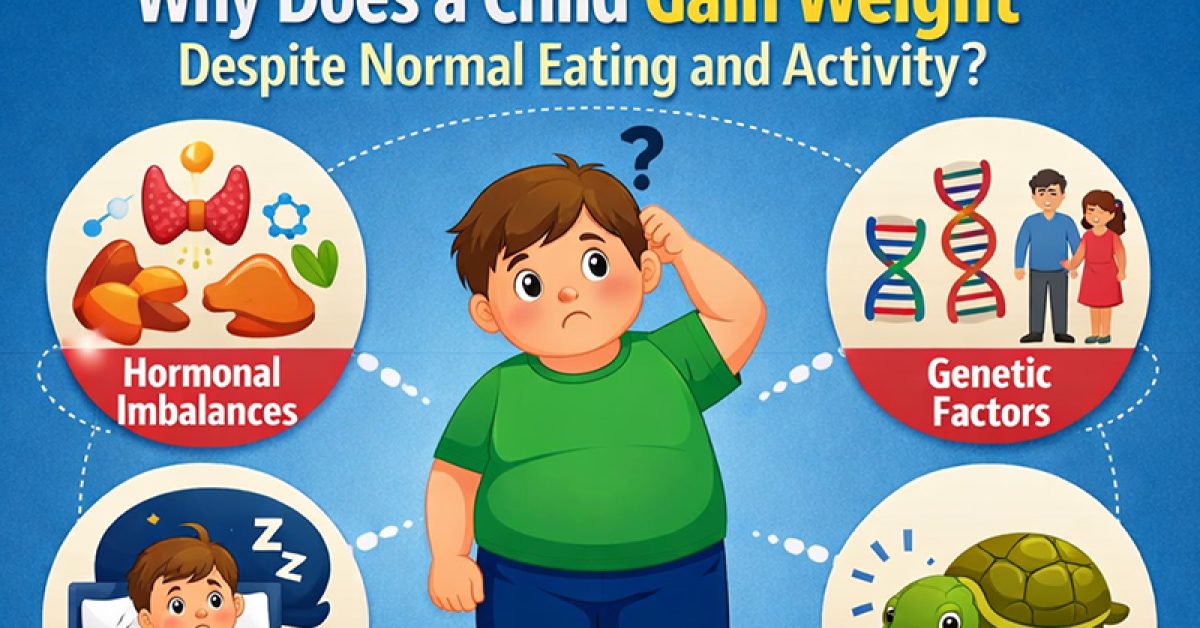
Weight gain in children is a common cause of distress amongst parents. And even more when the said weight gain happens without any change in eating habits or physical activity. This fluctuation in weight can be frustrating. Many adolescent children face this same situation, and many times, due to a lack of any concrete reason, their situation is brushed off without any medical advice. But it is important to understand that nothing in our body happens without a reason, and thus, weight gain is also influenced by many factors other than changes in eating habits and physical activity.
Being aware of the other factors that can trigger child weight gain is essential for parents to respond with care, patience, and the right medical support. In this blog, we will learn about childhood weight gain causes.
Weight Gain Is Not Always About Overeating
A prevailing misconception among people is that weight gain always happens because a child eats too much or exercises too little. But the fact is, children’s bodies go through different sorts of changes constantly during their growing stage. Weight gain in kids can happen even when their calorie intake levels appear normal.
Causes of Weight Gain in Children
There are a variety of factors that play an important role in determining a child’s weight, ranging from mental to physical reasons. Some of those reasons are mentioned below.
Growth and Development Phase
As stated above, a child’s body goes through different stages of growth, and weight gain can occur for many reasons, such as hormonal changes during puberty, uneven growth sprut or some children also gain weight before their height increases. This type of weight gain is often normal and balances out over time.
Genetic or Hereditary Reasons
A child’s genes have a strong influence on how their body grows, stores fat, and uses energy. If their parents or close blood relation has a naturally larger body frame, chances are they may inherit similar traits. Genetic factors commonly determine metabolism speed, fat distribution, and appetite; this does not mean a child is unhealthy.
Changes in Hormones
Hormones play a major role in weight regulation. Even small hormonal shifts can affect how the body stores energy. Some examples, like the thyroid, can affect metabolism, and puberty can cause an imbalance of growth-related hormones. These changes can lead to gradual weight gain even without changes in diet or activity.
Sleep Quality and Duration
Sleeping habits are often overlooked as a reason for weight gain in children, even though it significantly affects that. Children who do not get enough quality sleep may gain weight despite eating normally. Poor or insufficient sleep can increase hunger hormones, reduce energy levels, affect mood, and disrupt normal metabolism.
Stress and Emotional Factors
Some parents fail to understand that there are also reasons in a child’s life that lead to them experiencing stress, just like adults. School pressure, social challenges, family changes, or emotional stress can affect eating behavior and body chemistry. Stress can lead to emotional eating and can reduce motivation for physical activity.
Hidden Calories and Portion Sizes
Even when eating habits seem normal and nothing out of the ordinary, small munching habits can add extra calories without getting noticed. Some of the common examples are sugary drinks, frequent snacking between meals, large portion sizes according to age, or consuming highly processed foods; these factors steadily increase weight.
Undetected Medical Conditions
In some cases, underlying medical conditions can contribute to weight gain. These are less common but important to consider if weight gain is rapid or unexplained. Common causes may include hormonal imbalance disorder, thyroid problems, diabetes, etc. Consulting a pediatric endocrinologist can help you assess these possibilities timely.
Why Dieting Is Not the Solution for Children
Many times, in the haste of making children lose weight, parents start restricting their eating habits. Cutting off your child’s calorie intake is not recommended unless directly advised by a healthcare professional. This can have more negative consequences than positive, as the goal is to maintain overall health and not to just lose weight.
Some of the reasons why it is not advised are:
- Affect growth and development
- Create unhealthy relationships with food
- Increase stress and emotional issues
Other Alternatives for Losing Weight
Instead of directly controlling the weight and eating habits of children, parents should focus on creating a healthy environment where children lose weight without realizing it, such as:
- Encourage balanced eating habits without pressuring
- Making sure they have a proper sleep routine
- Promote daily movement in a playful way
- Foster a supportive environment
- Limit their screen time gently
Final Thoughts: Consult a Medical Professional for Better Guidance
A child gaining weight despite normal eating and physical activity is more common than many parents realize. Weight is influenced by a combination of growth, genetics, hormones, sleep, emotions, and lifestyle factors. With understanding, patience, and supportive habits, most children can grow into healthy adults. The goal is not to change a child’s body, but to support their overall well-being.
Book an appointment with the best pediatric endocrinologist in Dubai, Dr Ashish Malpani, who can guide parents and children through this change with patience and care.